Gemini 3.8 Flash vs Muse Spark 1.3 (2026): Official Prices Are $0.75/$3.75 vs $1.25/$4.25 — and Meta's Best Mode Isn't Callable Yet
Google shipped Gemini 3.8 Flash and Meta answered with Muse Spark 1.3 hours later on September 2, 2026. I opened both official pricing pages myself. Here are the real numbers, plus why Meta's headline scores come from a mode developers can't call today.
When a new model lands, most of us jump straight to the benchmark chart. This time I flipped the order. Google published Gemini 3.8 Flash on September 2 and Meta pushed Muse Spark 1.3 a few hours later, so I opened both official pricing pages and read the numbers myself: Gemini 3.8 Flash runs $0.75 in and $3.75 out per million tokens; Muse Spark 1.3 runs $1.25 and $4.25. The catch is that Google’s figures hold only through December 31, 2026 and double on January 1, 2027. That single line is close to the whole conclusion.
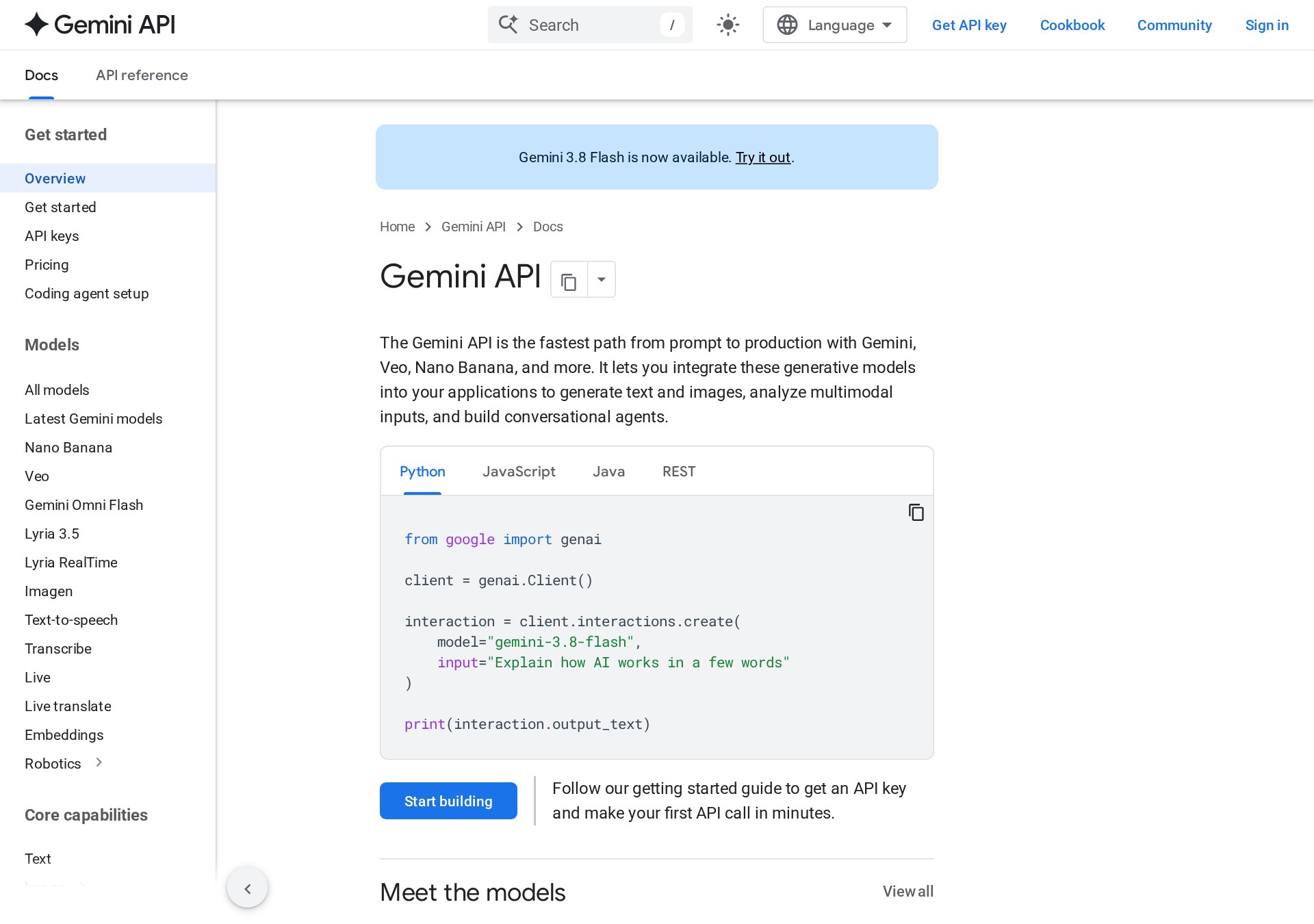
Why Google shipped its third Flash in six weeks
Google’s own announcement spells out the cadence: 3.7 Flash was three weeks ago, and this is the third Flash release in six weeks. Rather than scaling the model up, Google is pushing reasoning and coding gains at the same speed and roughly the same cost band.
Two variants shipped. 3.8 Flash targets long-horizon software engineering and autonomous agents. 3.8 Flash Cyber is tuned for vulnerability discovery and automated patching — and you can’t just sign up for it. Access runs through Google’s new Fairwind Program for vetted government bodies, critical-infrastructure operators and software maintainers.
On numbers, 3.8 Flash posts 54.9% on HLE-Verified. The Cyber variant clears a 70% success rate on an internal benchmark spanning codebases in 20 programming languages. The deployment anecdotes are more concrete than usual: Chrome’s security team got 2.6x more correct patches than from much larger commercial models, and Google’s Cloud Vulnerability Research team found a critical foundational bug in under two hours — work that normally takes months.
What do the pricing pages actually say?
Here’s the measured part. The 3.8 Flash block on Google’s pricing page reads:
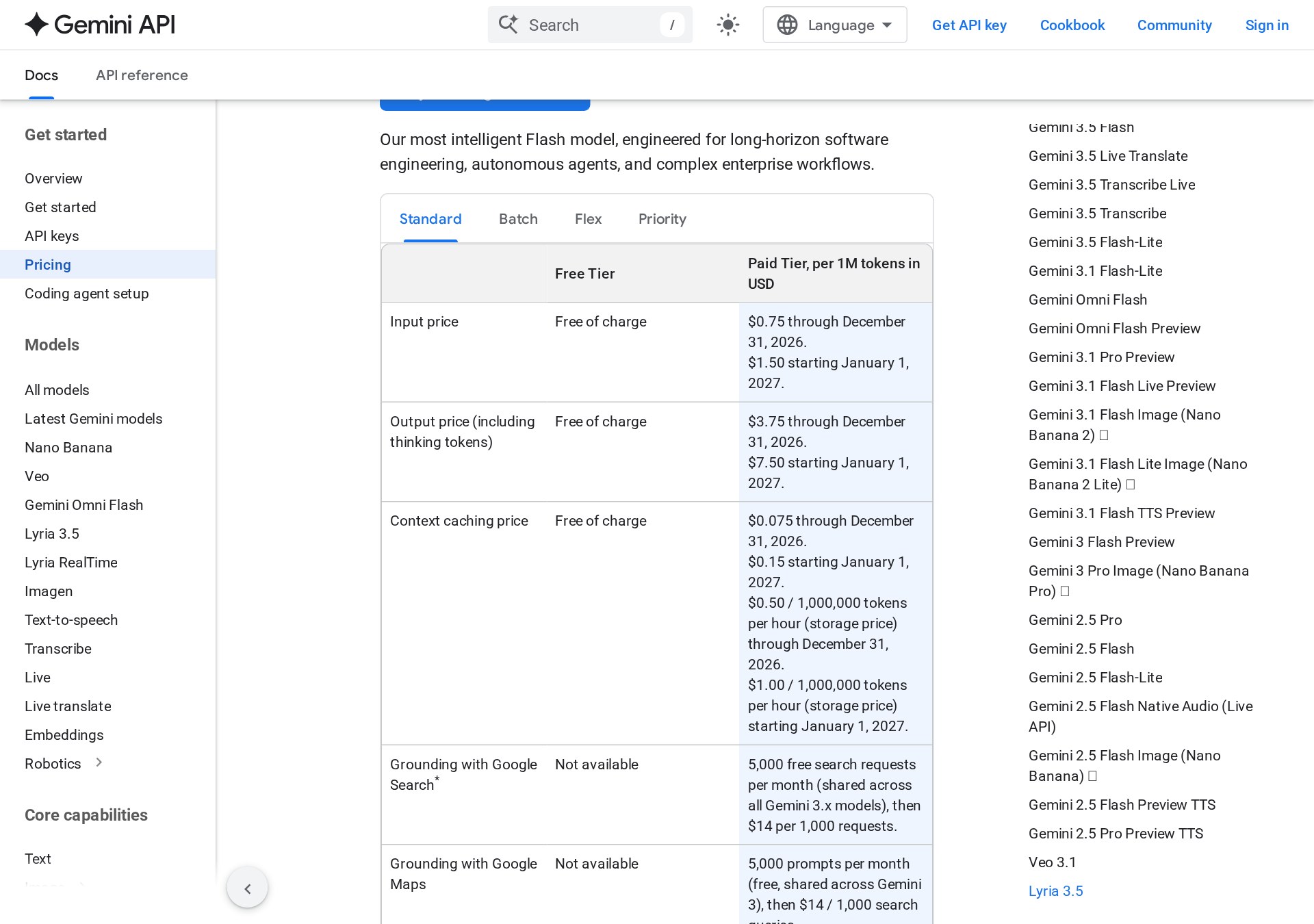
Input $0.75, output $3.75, context caching $0.075 — each one carrying the qualifier “through December 31, 2026,” with $1.50 / $7.50 / $0.15 listed directly underneath for January 1, 2027 onward. A free tier still exists.
Meta’s official “Models and pricing” table is just as blunt:
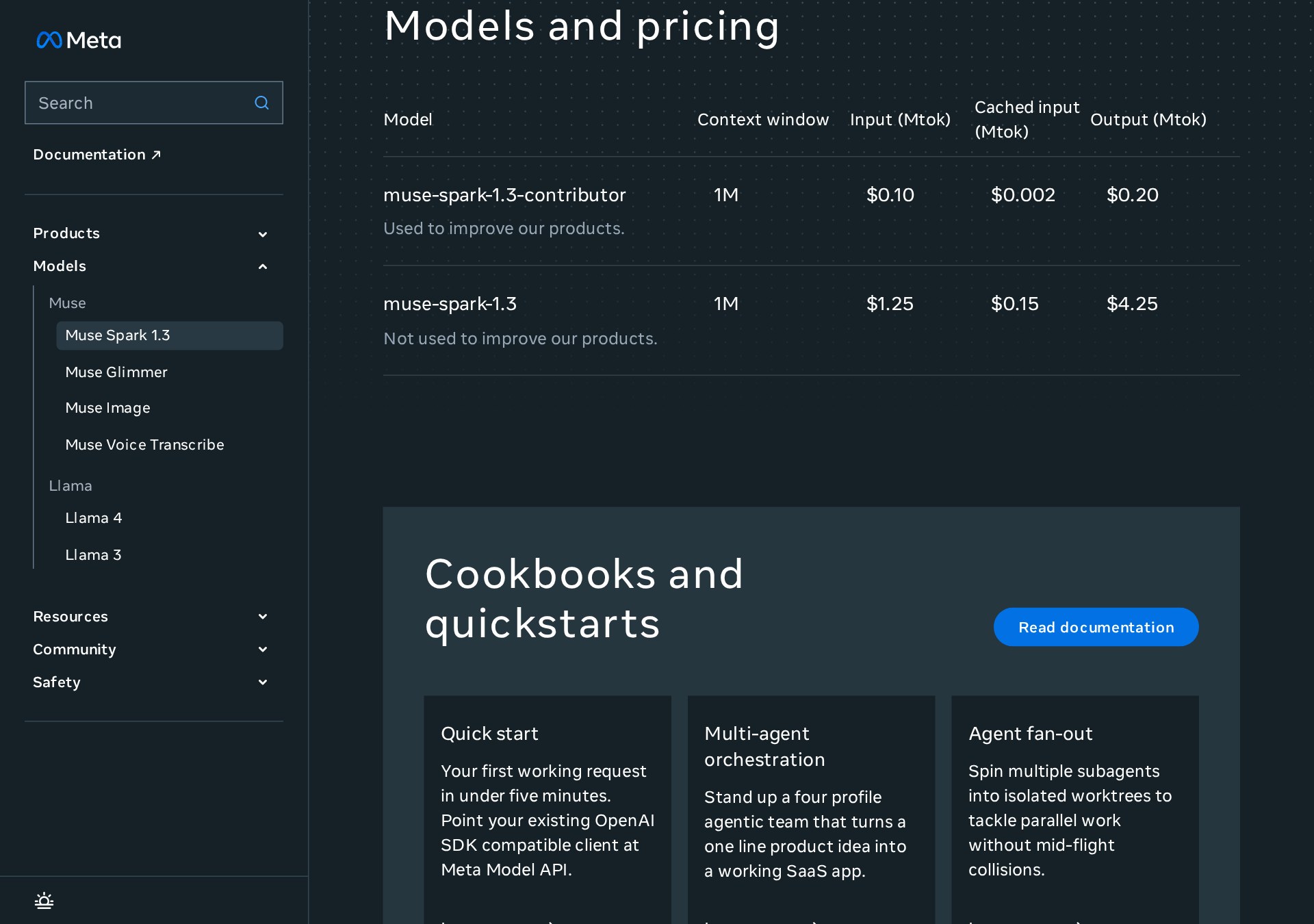
| Model | Context | Input (1M) | Cached input | Output (1M) |
|---|---|---|---|---|
| muse-spark-1.3 | 1M | $1.25 | $0.15 | $4.25 |
| muse-spark-1.3-contributor | 1M | $0.10 | $0.002 | $0.20 |
| gemini-3.8-flash | — | $0.75 → $1.50 | $0.075 → $0.15 | $3.75 → $7.50 |
That contributor tier is startlingly cheap, and the reason sits right under the row name: “Used to improve our products.” Your prompts feed training. If you’re piping internal code or customer data through it, read that line before the price. Note too that both vendors quote in USD — what you actually pay depends on your local currency and tax treatment.
Should you trust Meta’s 1754?
Meta’s benchmark table is impressive on its face: GDPval-AA v2 1754, DeepSWE v1.1 75.4, Terminal-Bench 2.1 88.8, MRCR 512K–1M 98.1. Against the 1.2 generation’s 1615, that’s a real jump.
The problem is the column header. Every one of those figures is a (max) result, and max reasoning is still gated pending additional safety testing. What you can call through the API today is the tier below it, xhigh. It rhymes with the situation when we covered Muse Spark 1.2 last month — the headline configuration and the shipping configuration keep drifting one notch apart.
Compare the tiers you can actually call and the gap narrows sharply. Third-party lab Artificial Analysis puts Muse Spark 1.3 xhigh at an intelligence index of 61 for $0.55 per task, against 59 and $0.58 for Gemini 3.8 Flash at high reasoning. On throughput, Google runs about 305 output tokens per second to Meta’s 235 — roughly 30% faster.
A small thing worth knowing
Open Google’s pricing page in Korean or Japanese and the model list stops at 3.6 Flash. No 3.7, no 3.8. Switch to English and the 3.8 Flash table appears. If you’re checking current unit prices in any non-English locale, flip to English first — the translated docs run days to weeks behind.
So which one do you pick?
For long-running agent workloads, Google is currently cheaper and faster. Just don’t hard-code $0.75 into your unit-economics sheet. Write “introductory, doubles Jan 1” next to it, or January will be an unpleasant surprise.
If prompts feeding training is acceptable — experiments, side projects, personal tooling — Meta’s contributor tier at $0.10 / $0.20 has no real competition. For wiring a coding agent into your day, see our Cursor write-up; for running a model as a desktop companion, the Gemini Spark on macOS piece picks up the thread.
FAQ
Q. How much does Gemini 3.8 Flash cost? Per the official pricing page, $0.75 per million input tokens and $3.75 per million output tokens. That’s an introductory rate through December 31, 2026; the same page lists $1.50 / $7.50 starting January 1, 2027.
Q. Is Muse Spark 1.3 better than Gemini 3.8 Flash? Meta’s top scores (GDPval-AA v2 1754 and friends) come from the max reasoning mode, which developers can’t call yet. Comparing what ships today, third-party measurement puts xhigh at 61 versus 59 for Gemini 3.8 Flash, with Google roughly 30% faster on output speed.
Q. Is the contributor tier safe to use? At $0.10 in and $0.20 out it’s remarkably cheap, but Meta’s own table marks it “Used to improve our products.” Your prompts are used for training, so keep sensitive code and customer data off it.
Related posts
 Big Tech
Meta Muse Spark 1.2 & Muse Code Explained 2026: Terminal Coding Agent, Subagents, Pricing
The coding-agent race heats up — Meta enters the terminal
 Big Tech
Alibaba Qwen3.8-Max Explained 2026: 2.4T MoE, 1M Context, 86.6 Terminal-Bench
The real story is how fast China's open weights are closing on the frontier
 Big Tech
DeepSeek V4 Flash 0731 Explained 2026: $0.14/$0.28, 1M Context, 82.7% Terminal-Bench
No new design — just re-training. The cheap, efficient coding model's next move